Providing Laser Eye Surgery in Wellesley
Boston LASIK eye surgeon Dr. Ernest Kornmehl exclusively offers bladeless eye surgery, also known as all-laser LASIK. Blade Free LASIK surgery is performed with the IntraLase method, during which a femtosecond laser, rather than a handheld surgical blade (microkeratome), is used for the creation of the corneal flap. The corneal flap is a thin piece of tissue that is separated from the eye and folded back to expose the stroma (middle layer of the cornea) for laser reshaping.
By using a laser for the creation of the corneal flap, Dr. Kornmehl is able to perform laser eye surgery with more precision and control, while reducing certain risks associated with a surgical blade.
Dr. Kornmehl strives to provide his patients with maximum safety and therefore strongly believes in the many advantages of bladeless LASIK eye surgery, including:
- Reduced anxiety associated with surgical blades
- Increased flap predictability
- Precise and even corneal flaps
- Reduced risk of buttonholes (improperly formed flaps)
- Reduced risk of free caps (unattached flaps)
- Reduced risk of epithelial slough (damaged eye tissue)
- Reduced risk of dry eye after surgery
- Better flap adherence to the cornea following LASIK surgery
- Reduced recovery time
Following the creation of the corneal flap, Dr. Kornmehl uses a state-of-the-art excimer laser system to reshape the cornea, thereby eliminating most vision flaws, including nearsightedness, farsightedness and astigmatism. Boston LASIK patients who undergo all-laser LASIK with Dr. Kornmehl are often able to greatly reduce or completely eliminate their dependence on glasses and contact lenses.
The LASIK Procedure, Step by Step
Step 1: The eyes are completely numbed so the patient does not feel any discomfort during the procedure. The patient is escorted into the treatment room and reclines in a comfortable position under the laser.
Step 2: Dr. Kornmehl uses a state-of-the-art femtosecond laser to create a thin, hinged flap on the surface of the cornea.
Step 3: Dr. Kornmehl folds back the flap to expose the underlying stromal tissue.
Step 4: Dr. Kornmehl uses an excimer laser to carefully remove miniscule amounts of stromal tissue and reshape the cornea so it can better focus light on the retina.
Step 5: Once Dr. Kornmehl has reshaped the cornea, he restores the flap to its original position. It does not require any stitches or sutures and heals on its own.
LASIK Cost
LASIK is one of the best investments someone can make in their quality of vision and life. By reducing or eliminating the need for corrective eyewear, LASIK can save patients thousands of dollars in glasses and contacts-related costs.
Kornmehl Laser Eye Associates believes LASIK should be financially accessible to those who qualify for treatment. We offer several different payment and financing options, and our staff is happy to provide more details over the phone or email.
Who Is Best Suited for LASIK Eye Surgery?
LASIK is well suited to individuals who:
- Are at least 18 years old
- Are nearsighted, farsighted or have astigmatism
- Have a stable vision prescription with no significant changes in the past six months
- Are in good general health
- Do not have any active eye diseases or infections that could jeopardize the safety of surgery
- Have realistic expectations of the procedure’s outcomes
- Can accept the risk of side effects or rare complications
Dr. Kornmehl is devoted to educating prospective patients about laser eye surgery and helping them make informed decisions about their care. He requires an in-person consultation to confirm a candidate’s eligibility.
iDesign
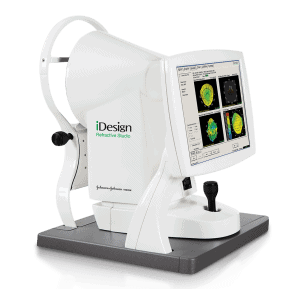 The first LASIK procedure was performed two decades ago. While the surgery itself is largely the same today, certain advancements, such as iDesign, have been made to improve the effectiveness of the procedure.
All of Dr. Kornmehl’s laser vision correction patients opt in to iDesign to get better results from their LASIK and PRK procedures. iDesign is state-of-the-art technology that captures over 1,200 measurements of your eye to generate a custom map of each of your eye’s unique characteristics. With this detailed eye map showing curvature and elevation, Dr. Kornmehl is able to perform LASIK or PRK in a way that is suited to your unique eyes.
Ordinarily, doctors only consider a patient’s existing vision prescription when performing refractive surgery. While that is certainly useful information in many respects, it does not paint the full picture. iDesign allows Dr. Kornmehl to take into account all of your eye’s irregularities and imperfections in order to make as many improvements as possible. More specifically, it can analyze the ways in which light travels within your eye and how it refracts from the cornea to the retina.
 The results speak for themselves. iDesign patients report not only an ability to see without their glasses or contact lenses, but a quality of sight that may actually be better than it was with their previous prescription. While LASIK or PRK has often been a surgery favored by people who do not want to wear glasses or contacts anymore, the upgrade in vision following iDesign now makes the procedure a smart choice for anyone who wants the crispest vision available to them.
Patients who utilize iDesign are also more likely to recover from their surgery more quickly, have improved night vision, reduce astigmatism and experience fewer instances of glare and halos. The risks and complications associated with LASIK or PRK are even lower since the surgery is performed with more knowledge about your eyes’ precise curvature and flaws.
At the end of the day, your vision is nothing to play around with. If you are making a commitment to permanently see better with LASIK surgery, it makes sense to use every tool available to achieve an excellent result so your vision will be fantastic for a lifetime. iDesign is a proven way to maximize the effects of LASIK and PRK, and Dr. Kornmehl wholeheartedly endorses it.
Keep in mind that this technology means little when used by a doctor who does not know how to make proper use of it. As of one of Boston’s finest ophthalmologists, Dr. Kornmehl understands how to interpret the iDesign image and then incorporate this information into the procedure he performs.
After over 30 years improving patients’ vision, Dr. Kornmehl can be counted on to accomplish your best possible result. To discuss LASIK and iDesign with Dr. Kornmehl at his Wellesley, Massachusetts office, please contact Kornmehl Laser Eye Associates by calling 1 (877) 870-2010 today.
LASIK FAQs
How long does LASIK surgery take?
Expect your LASIK surgery to take about 10 minutes per eye. The laser correction itself takes less than a minute per eye.
Is laser eye surgery done while awake?
Yes, laser eye surgery is typically performed while the patient is awake. A relaxant is given before surgery.
How painful is LASIK eye surgery?
LASIK surgery is not painful. Special measures will be taken prior to your laser eye surgery to prevent you from feeling any discomfort. Your eyes will be numbed with special drops and you will take a sedative or other medication to put you into a deeply relaxed and comfortable state during the procedure. You will be positioned in a comfortable reclining chair under the laser platform.
Can LASIK correct both nearsightedness and farsightedness at the same time?
Technically it is impossible to be nearsighted and farsighted in the same eye. But it is possible to be nearsighted and simultaneously lose the ability to focus up close due to presbyopia (the age-related deterioration of reading vision).
A technique known as modified monovision LASIK can correct one eye for distance vision and the other eye for intermediate vision. Most people adapt very well to the results of modified monovision LASIK.
Can I have both eyes treated on the same day?
Yes, it is common to have both eyes treated on the same day.
What happens if you blink during laser eye surgery?
This is a common concern, but nothing to worry about. You will receive medication prior to surgery that suppresses your urge to blink. A small lid speculum will hold your eyelids open during surgery, preventing you from blinking. Also, the laser system that we use for LASIK has an eye-tracking feature to monitor the position of your eyes and modify treatment to compensate for any movements. This feature helps enhance the precision and accuracy of your LASIK treatment.
Is there anything I should not do after eye surgery?
You should not ignore any of the detailed aftercare instructions provided by Dr. Kornmehl and our team. You should not rub your eyes or get water or steam in your eyes for two weeks. Avoid swimming in pools, hot tubs, oceans, and lakes during that time. Also, you should not apply eye makeup for up to a week after surgery.
How long does it take to recover from LASIK eye surgery?
Although recovery is different for everyone, it tends to be quite rapid. Most patients notice an improvement in their vision as soon as the day of surgery or the following day. By a week after surgery, any post-operative side effects have subsided and vision has stabilized.
How quickly can I return to normal activities?
Many patients are able to drive and return to work as soon as the day after LASIK surgery.
Is my night vision going to be affected?
A minority of patients experience night vision side effects after LASIK such as glare, halos or starbursts around lights that can last up to three months. However, studies show these side effects are much less common after surgery than before surgery.
To schedule a consultation with Boston LASIK surgeon Dr. Kornmehl, contact Kornmehl Laser Eye Associates today.